Penetrating damp: causes, signs and how to fix it
Updated June 2026
Penetrating damp is water getting in from outside and tracking horizontally through a wall, rather than rising up from the ground. The give-away is timing: it appears or worsens after rain. Fixing it means finding and repairing the fault that’s letting water in, then treating the wall so it can dry. Treat the inside without fixing the source and it just comes back.
It’s especially common in exposed, coastal spots like Brighton and Hove, where wind-driven rain hits older solid walls hard.
Signs of penetrating damp
Penetrating damp tends to show as a defined patch rather than an even line, and it tracks the weather:
- Damp patches that darken during or after heavy rain
- Staining around a chimney breast, window reveal or roofline
- Blown plaster, peeling paint or a musty smell on an external-facing wall
- Damp higher up the wall, not just at floor level
Because it follows rainfall, it’s often mistaken for a one-off leak. Usually the water is finding a repeatable path in.
Penetrating damp vs rising damp vs condensation
This is where people most often misdiagnose, and the wrong fix is expensive. The quick version:
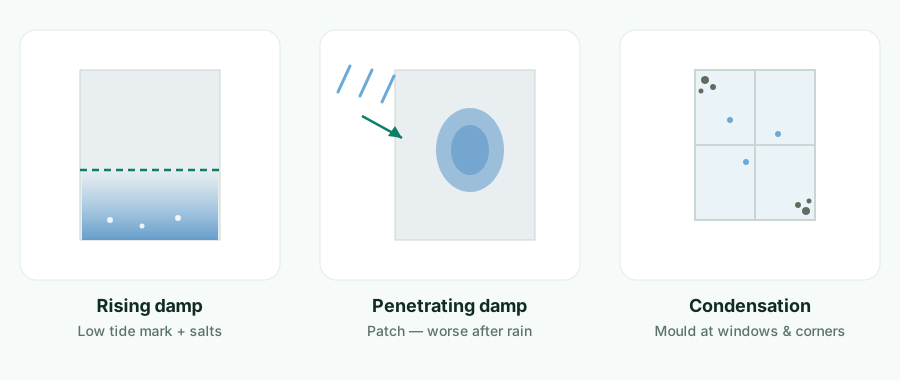
- Penetrating damp moves with the weather and can appear anywhere on the wall.
- Rising damp sits low as a tide mark, up to about a metre, with salt deposits.
- Condensation shows as black mould around windows and in corners, worse in winter.
A survey confirms which you’re dealing with before any work is quoted.
What causes penetrating damp
It almost always traces to a building fault rather than the wall itself:
- Cracked or hollow render and failed pointing
- Blocked or leaking gutters and downpipes
- Defective flashing around chimneys and roof junctions
- Porous brickwork on exposed elevations
- Failed window and door seals
How penetrating damp is fixed
The order matters: deal with the outside first, then the inside.
- Trace the entry point and repair it, whether that’s repointing, render repair, sealing porous brick with a breathable treatment, or fixing guttering.
- Let the wall dry out.
- Replaster internally where the plaster has blown.
You can read more on our penetrating damp service page.
What it costs
Penetrating damp repair typically runs £500 to £2,500, because the price depends entirely on the source: a section of repointing is very different from re-rendering a whole elevation. See our guide to damp proofing costs.
Penetrating damp FAQs
How do I know if it’s penetrating or rising damp?
Penetrating damp worsens after rain and can appear anywhere on the wall; rising damp is a low tide mark near the floor. The survey confirms it.
Will penetrating damp go away on its own?
No. The water keeps finding the same path in until the external fault is fixed.
Can I just treat the inside wall?
Treating only the interior delays the problem rather than solving it. The lasting fix is stopping the water getting in.
Got a patch that worsens after rain in Brighton, Hove or Sussex? Book a free survey and we’ll trace it.