Damp services · Brighton & Hove
Rising damp treatment
Tide marks and crumbling plaster at skirting level? We diagnose and fix it for good.
Rising damp is groundwater soaking up through a wall because the damp-proof course has failed or was never there. It’s common in Brighton and Hove’s older terraces, where original slate or bitumen courses have broken down over a century of use. We treat it by installing a new damp-proof course and replacing the salt-damaged plaster, so the wall dries out and stays dry.
The first job, though, is making sure it’s actually rising damp. A lot of what gets diagnosed as rising damp turns out to be condensation or a penetrating leak, and the treatment for those is completely different.
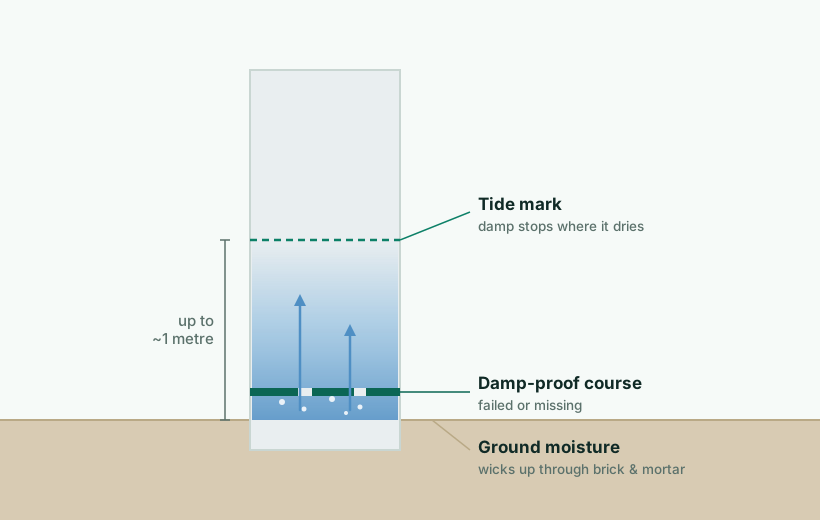
What rising damp looks like
The classic sign is a tide mark up to about a metre above the skirting, often with a yellowish or brown stain. You might also see:
- Crumbling or bubbling plaster near the floor
- White, fluffy salt deposits on the wall (efflorescence)
- Skirting boards and timber that feel damp or have started to rot
- Peeling paint or lifting wallpaper low down on the wall
If the damp is higher up the wall, around windows, or in a single patch, it’s more likely condensation or penetrating damp than rising damp.
What causes it
Every ground-floor wall needs a working damp-proof course: a barrier near the base that stops moisture climbing. Rising damp appears when that barrier fails, gets bridged by raised ground or a new path, or was never installed. Raised patios, banked-up flower beds and high external render are common culprits in Brighton gardens, because they let damp track around the original course.
How we treat it
After the survey confirms the cause, treatment usually runs in three steps:
- Install a new chemical damp-proof course, injected as a cream into the mortar bed.
- Remove the contaminated plaster, which holds the salts that keep walls looking damp.
- Re-apply salt-resistant plaster so the wall finishes clean and dry.
We also fix anything bridging the course, like high ground levels or external render carried below the line.
What it costs
A single wall is usually £600 to £1,500, most of which is the replastering rather than the injection. For the full picture, see our guide to damp proofing costs. Your survey gives you a fixed-price quote, and the survey fee comes off the work.
Why the diagnosis matters
Treating a wall for rising damp when the real problem is condensation means you spend the money and still have the damp. That’s the single most common way people overpay. Our survey tells you what’s genuinely wrong first, in writing, before anyone quotes for work.
Common questions
How long does it take to dry out? New plaster needs several weeks to dry fully before you redecorate. We’ll give you a realistic timeline.
Is the work guaranteed? Yes, treatment is backed by a 30-year guarantee, valid because the diagnosis is done properly first.
Worried about rising damp? Book a free survey and we’ll tell you what’s actually going on.
Every job starts with a free survey and an honest written diagnosis, then a fixed-price quote with the survey fee deducted from the work. See how it works.
Other services
Penetrating damp
Water tracking through walls from outside — traced to the source and stopped.
Condensation & mould
Black mould and streaming windows? We tackle the cause, not just the symptom.
Damp surveys
Independent, honest damp surveys for homeowners, buyers and landlords.
Timber treatment
Woodworm, wet rot and dry rot identified and treated before they spread.
Basement & cellar waterproofing
Tanking and cavity drainage to turn a damp cellar into usable, dry space.
Salt-damaged replastering
Specialist replastering after damp treatment so walls finish clean and dry.
Worried about damp? Book a free survey.
Honest diagnosis, a fixed-price quote, and no pressure. Covering Brighton, Hove & Sussex.