Rising damp: causes, signs and treatment (the complete guide)
Updated June 2026
Rising damp is ground moisture climbing up through a wall because the damp-proof course has failed or is missing. It affects the bottom metre or so of ground-floor walls, leaves a tide mark and crumbling plaster, and is most common in older houses built before modern damp-proofing. It’s very treatable once it’s correctly diagnosed, and that last point matters more than anything else: a lot of damp blamed on rising damp is actually condensation or a leak, and the fixes are completely different.
This guide covers what rising damp is, how to recognise it, how to tell it apart from the other types, and what treatment actually involves.
What is rising damp?
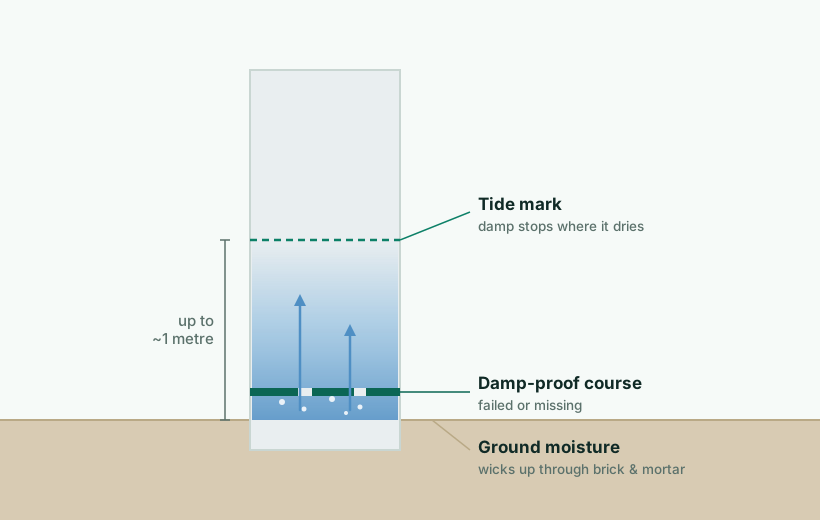
Every house needs a barrier near the base of its walls to stop groundwater soaking upwards. That barrier is the damp-proof course (DPC). In older buildings it might be slate or engineering brick; in newer ones it’s a plastic membrane. Rising damp happens when that barrier fails, is bridged, or was never installed, so moisture from the ground wicks up through the brick and mortar like water up a sponge.
It can only climb so far. Gravity and evaporation usually stop it at around a metre, which is why rising damp shows low on the wall and never up near the ceiling. Damp higher up the wall is almost always something else.
What does rising damp look like?
The signs are fairly distinctive once you know them:
- A tide mark: a horizontal stain, often yellowish or brown, up to about a metre above the skirting
- Crumbling, bubbling or salt-stained plaster near the floor
- White, fluffy salt deposits on the wall (efflorescence), brought up out of the ground
- Damp, rotting or springy skirting boards and floor timbers
- Peeling paint or lifting wallpaper low down on the wall
- A persistent musty smell at floor level
If what you’re seeing doesn’t match this pattern, it’s worth ruling out the alternatives before spending anything.
Rising damp vs condensation vs penetrating damp
Most misdiagnosis comes from confusing these three. Here’s how they differ:
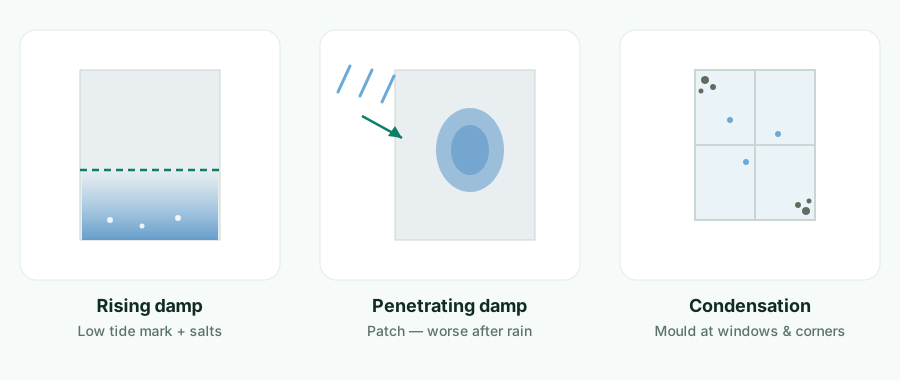
| Type | Where it appears | Tell-tale sign |
|---|---|---|
| Rising damp | Low on ground-floor walls, up to ~1m | Tide mark, salts, worse at skirting level |
| Condensation | Around windows, corners, cold spots, any floor | Black mould, streaming windows, worse in winter |
| Penetrating damp | Anywhere, often a defined patch | Worsens after rain, traces to an outside fault |
Condensation is by far the most common, and the cheapest to fix, because the answer is usually ventilation rather than building work. Penetrating damp moves with the weather. Rising damp is the only one that sits as a low, even tide mark drawing salts out of the ground. If you’re unsure, a survey settles it before you pay for the wrong treatment.
What causes rising damp?
It comes down to the damp-proof course failing or being bypassed. Common reasons include:
- Age: original slate or bitumen courses break down over decades
- No DPC at all: many very old properties never had one
- Bridging: raised garden beds, patios, paths or external render carried below the DPC line give moisture a route around the barrier
- High external ground levels: soil piled above the internal floor level lets damp track in
Bridging is the one people miss. Sometimes “rising damp” is solved simply by lowering a flower bed or cutting back render, with no injection needed at all.
How is rising damp treated?
Once a survey confirms it really is rising damp, treatment usually runs in three stages:
- Install a new damp-proof course. The modern method is a silicone-based cream injected into the mortar bed, which spreads to form a water-repellent barrier.
- Remove the contaminated plaster. This is important: the old plaster holds ground salts that keep attracting moisture and ruining paint even after the damp itself is stopped.
- Replaster with a salt-resistant system, then let it dry fully before redecorating.
Anything bridging the DPC, like high ground or external render, is dealt with at the same time. You can read more on our rising damp treatment page.
How much does it cost?
A single wall is typically £600 to £1,500, with most of the cost being the replastering rather than the injection. A whole ground floor can run to £2,000–£4,000. We break the figures down in our guide to damp proofing costs.
Is rising damp dangerous?
Rising damp won’t harm you overnight, but left untreated it causes real problems: rotting skirting and floor timbers, ruined plaster and decoration, and damp conditions that encourage mould and woodworm. It also puts buyers off and gets flagged on mortgage surveys, so it’s worth dealing with rather than ignoring.
Rising damp FAQs
How do I know if it’s rising damp or just condensation?
Rising damp sits low on the wall as a tide mark with salt deposits; condensation shows as black mould around windows and in corners and is worse in winter. If you can’t tell, a damp survey confirms it before you spend anything.
Can I treat rising damp myself?
DPC injection creams are sold to the public, but the result depends entirely on correct diagnosis and proper replastering. Getting either wrong means the damp appears to return. For anything beyond a small area, it’s usually false economy to DIY.
How long does treatment take to dry out?
The injection and replastering are quick, but new plaster needs several weeks to dry fully before you can decorate. Painting too soon traps moisture and causes flaking.
Does rising damp come back after treatment?
Not if it was correctly diagnosed and treated, which is why reputable work carries a long guarantee. Damp that “comes back” is usually a sign the original problem was misdiagnosed.
If you’re in Brighton, Hove or Sussex and think you have rising damp, book a free survey and get an honest diagnosis before anyone quotes you for work.